Side-by-side photo comparison: Invasive vs native US toads
Note that "Bufo toad" is simply Florida's common name for the exact same invasive species called a cane toad in Australia (Rhinella marina, formerly classified as Bufo marinus). Focus behind the eyes: invasive cane toads have massive triangular parotoid glands and flat ridges with zero knobs, while native Southern toads carry smaller oval glands and unmistakable raised cranial crests ending in prominent knobs.
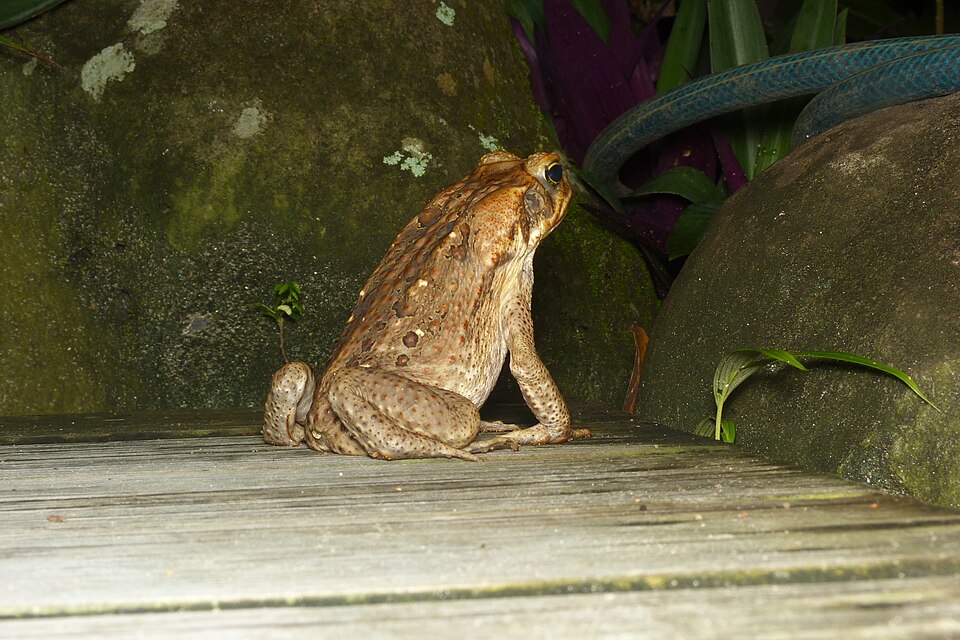
Invasive Cane / Bufo Toad
Rhinella marina (Invasive in FL, HI, TX)
Key marker: Huge triangular venom glands angled behind shoulders, flat eye ridges with no raised knobs, upright posture, adult length 4 to 6+ inches.
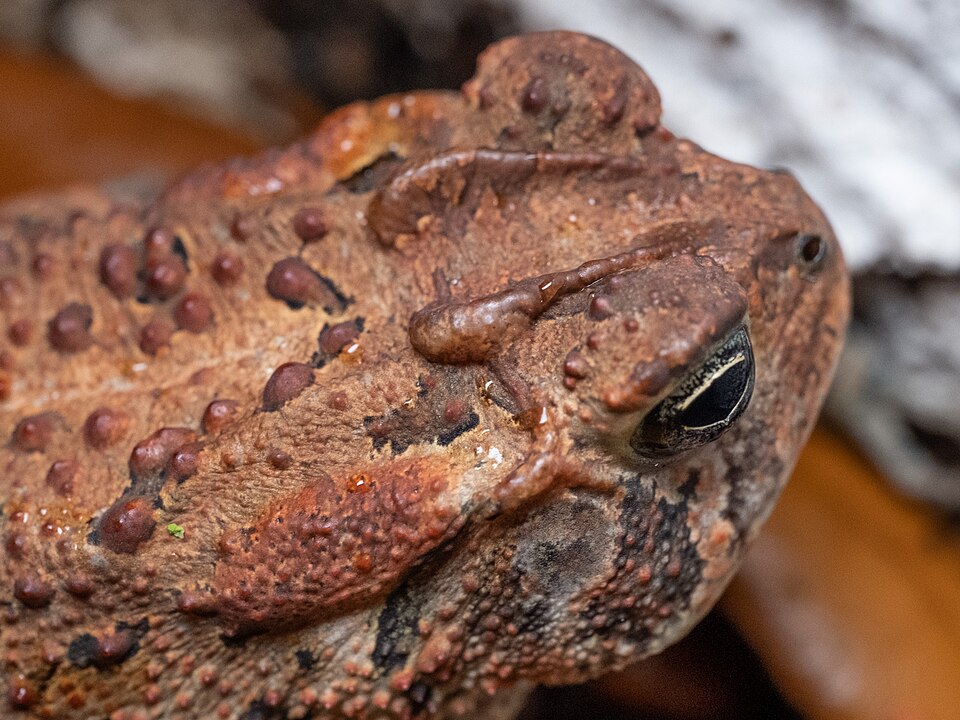
Native Southern Toad (head close-up)
Anaxyrus terrestris (Native — leave undisturbed)
Key marker: Look at the two raised ridges between the eyes ending in prominent round knobs, paired with smaller oval shoulder glands.
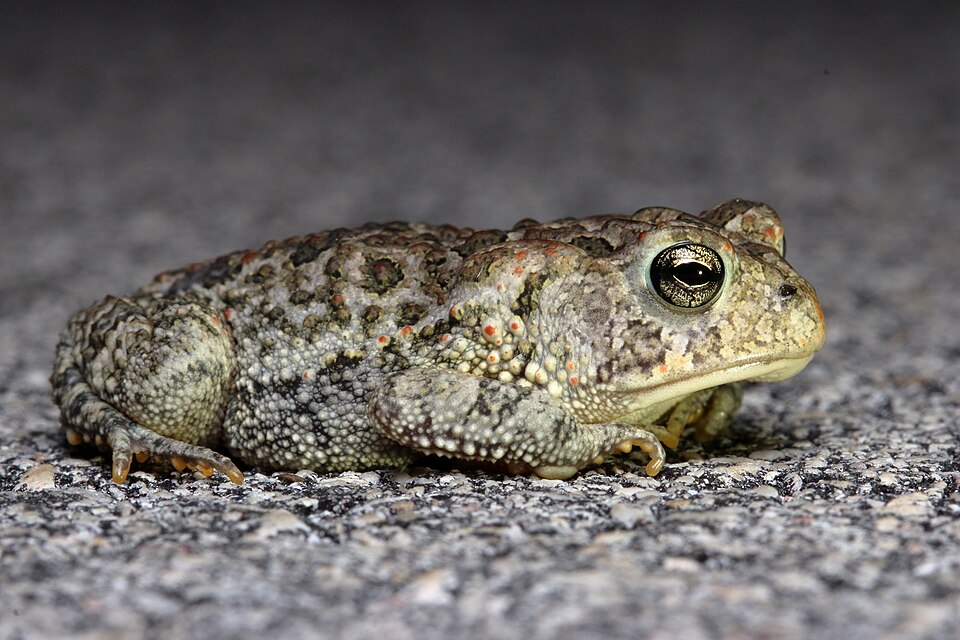
Native Southern Toad (full profile)
Anaxyrus terrestris (Native — leave undisturbed)
Why it looks similar: Warty brown-grey skin active on damp Florida driveways after dusk, but stays compact (under 3.5 inches).
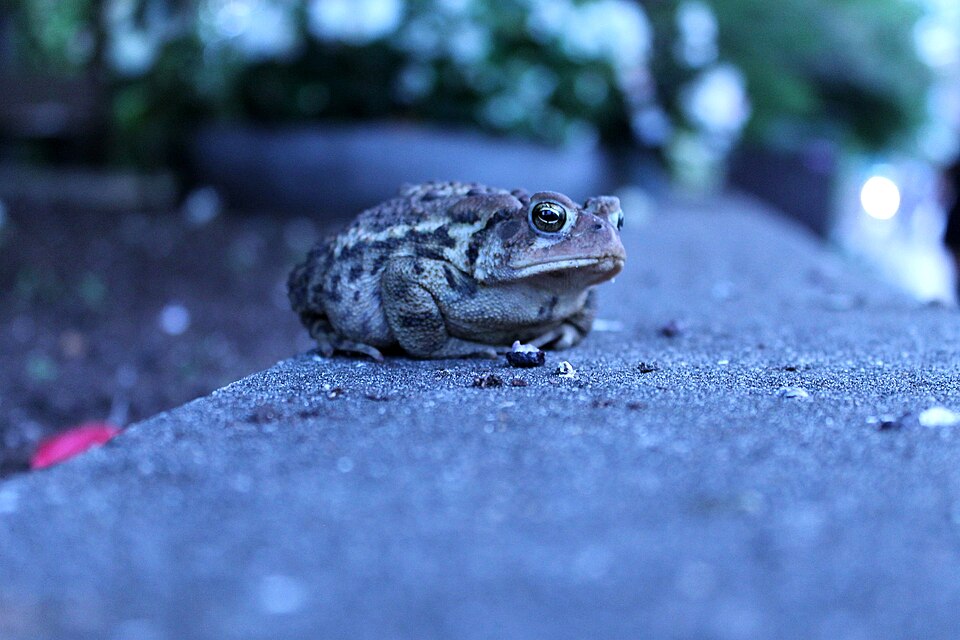
Native American Toad
Anaxyrus americanus (Native across eastern US)
How to tell it apart: Smaller kidney-shaped parotoid glands, 1 to 2 warts per dark dorsal spot, beneficial garden pest eater.
Interactive 5-trait US checker
Look closely behind the eyes with a bright flashlight. Cranial knobs and gland shape separate native toads from invasive cane toads cleanly.
Select the traits you can clearly observe
Never handle an unverified amphibian with bare hands. If even one key feature points to a native species, release it safely where you found it.
Head anatomy and feature table
| Feature | Invasive Cane / Bufo Toad | Native Southern / American Toad |
|---|---|---|
| Parotoid glands | Huge, triangular, angled downward behind shoulders | Smaller, oval or kidney-shaped behind eyes |
| Cranial crests / knobs | No raised knobs behind eyes; flat bony ridges over snout | Prominent raised crests ending in distinct knobs (Southern toad) |
| Adult body length | 4 to 6 inches commonly (occasionally up to 9 inches) | 1.5 to 3.5 inches maximum |
| Breeding call | Low, steady rattling drone like a distant small engine | High-pitched musical trill |
| Legal status (Florida) | Invasive non-native pest; illegal to relocate live | Beneficial native wildlife; leave undisturbed |